For most American travelers, a trip to Morocco is the ‘big one’ for the year. But with the standard U.S. vacation being roughly a week long, the challenge is always the same: how do you see the Sahara, the Atlas Mountains, and the ancient medinas without spending your entire trip sitting in the back of a van? Between the 8-hour flight from the East Coast and the inevitable jet lag, you can’t afford to waste time on bad logistics or slow public buses.
With more direct flight options it’s now possible to land in the morning and be sipping mint tea in a riad by lunch. Direct flight options include the United Airlines route from Newark to Marrakech and expanded Royal Air Maroc service from hubs like LAX and Miami.
So the secret to making a seven-day trip work isn’t trying to see the whole country; it’s about choosing a “one-way” route that hits the major icons efficiently.
In this article we propose an itinerary built specifically for those who want to make the most of Morocco within their seven-day trip.
How to travel to Morocco from the United States?
When you only have a week, your flight strategy is just as important as your on-the-ground itinerary. The goal is to minimize your transit time so you aren’t spending your first two days in a jet-lagged fog.
Flight Routes
Look for direct flights into Marrakech (RAK) or Casablanca (CMN). Major hubs like New York (JFK), Newark (EWR), Washington D.C. (IAD), and Miami (MIA) usually offer the most reliable direct connections. If you’re coming from the West Coast, you’ll likely have a layover in Europe—Paris, Madrid, and Lisbon are the easiest jumping-off points into Morocco.
The “Open-Jaw” Trick
This is the best way to save time. Instead of flying in and out of the same city, try to book your arrival into Marrakech and your departure out of Casablanca or Tangier. It saves you an entire day of driving back to where you started, which is huge when you’re on a tight schedule.
Managing Jet Lag
You’re looking at a 5- to 8-hour time difference depending on which coast you’re coming from. Most flights from the U.S. land in the morning. The temptation to nap as soon as you get to your riad is real, but don’t do it. Drop your bags, grab a strong Moroccan coffee, and stay outside in the sunlight until at least 8:00 PM to help your body reset.
Private Driver vs. Public Transport
In a longer 14-day trip, taking the train is a fun experience. But on a 7-day schedule, the train and bus won’t work for the desert. The Sahara is a long way from the big cities, and trying to navigate bus schedules or find taxis in rural areas will eat up your vacation time. Having a private driver-guide is the only way to hit the mountains, the desert, and the cities in a single week without feeling like you’re constantly waiting for a ride.
Day 1: Arrival and the Red City
Most flights from the States land in the morning. Head straight to your riad, drop your bags, and stay awake.
Read more about Moroccan Riads in our separate article.
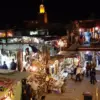
It’s the only way to beat the jet lag. Spend your first afternoon walking toward Jemaa el-Fna. The square really comes to life as the sun sets. You’ll see musicians, food stalls, and huge crowds. Grab dinner at a rooftop café. It’s the perfect spot to watch the city move while you have your first Moroccan meal. Get to bed early so you’re ready for a full day tomorrow.
Day 2: Marrakech Highlights & Hidden Gems
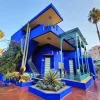
Start your morning at the Jardin Majorelle. You have to book your tickets online before you go. They don’t sell them at the door anymore. Get there right when they open at 8:00 AM. It’s the best way to see the famous blue buildings and exotic plants before the big tour groups arrive.
After the garden, head back toward the medina to visit the Bahia Palace. The name means “brilliance,” and you’ll see why when you look at the carved ceilings and tile work. From there, it’s a short walk to the Saadian Tombs. These were hidden for centuries and are some of the most beautiful historic sites in the city.
For lunch, try a rooftop restaurant near the Spice Square (Place des Épices). It’s a bit calmer than the main square.
In the afternoon, dive into the souks. This is where a local guide is really worth the investment. They can help you navigate the maze and find the best shops for leather, rugs, or lanterns without the stress of getting lost. End your sightseeing at the Ben Youssef Madrasa. It’s an old Islamic school with incredible architecture. Just keep in mind they only take cash at the entrance.
See our offers on more inspiration on what to do in Marrakech.
Day 3: The High Atlas and Ait Ben Haddou
Leave Marrakech early to head toward the High Atlas Mountains. The drive takes you over the Tizi n’Tichka pass, the highest major road in North Africa. It’s a winding route with incredible views of the peaks and deep valleys. The roads have been modernized, so it’s much smoother than it used to be, but it’s still a long climb. Make sure your driver stops at one of the panoramic lookouts for photos.
By early afternoon, you’ll reach Ait Ben Haddou. This is a massive, ancient fortress made of red earth and straw. It’s a UNESCO World Heritage site and has been the backdrop for dozens of movies like Gladiator and Lawrence of Arabia. You can cross the river on foot or use the bridge to enter the village. Walk all the way to the granary at the top for a view over the entire valley.
It’s free to enter the village itself, though some families may charge a small fee to see inside their individual homes. After you’ve explored, continue the drive for about thirty minutes to Ouarzazate. Spend the night here or in a nearby palm grove like Skoura. Breaking the trip here makes the long drive to the desert much easier to handle.
Day 4: Sahara Desert
Today is the biggest day of the trip. You’ll leave the mountains behind and head deep into the desert. On the way, stop at the Todra Gorge. These are massive limestone cliffs that tower 300 meters over a narrow river. It’s a great spot to stretch your legs and walk for twenty minutes along the water.
By late afternoon, you’ll reach Merzouga, the gateway to the Erg Chebbi dunes. This is where you swap your car for camels. The trek into the dunes takes about an hour and is timed perfectly for the sunset. The colors of the sand change from orange to deep red as the sun goes down.
You’ll spend the night at a desert camp tucked away in the dunes. These aren’t basic tents; most luxury desert camps have comfortable beds, private bathrooms, and hot showers. After a traditional moroccan dinner, the camp staff usually starts a campfire and plays Berber drum music. The stars in the Sahara are unlike anything you’ll see back home.
Day 5: The Long Road to Fes
This is your longest travel day, but the scenery changes completely as you head north. You’ll leave the dunes at sunrise and drive through the Ziz Valley. It’s home to one of the largest palm groves in the world. The view from the top of the canyon looking down at the thousands of date palms is one of the best photo ops of the trip.
As you climb back into the Middle Atlas Mountains, the landscape turns green. You’ll pass through the town of Midelt for lunch and then enter the Cedar Forest near Azrou. Keep your eyes open for the Barbary macaques—these wild monkeys live in the trees and are usually hanging out near the road.
Before you reach Fes, you’ll drive through Ifrane. It’s often called “Little Switzerland” because of the alpine-style houses and sloped roofs. It looks nothing like the rest of Morocco. You’ll arrive in Fes by early evening. Since the medina is a car-free maze of 9,000 alleys, your driver will meet your riad host at the nearest gate to help with your luggage. Get some rest tonight; you’ll be doing a lot of walking tomorrow.
Day 6: Fes Medina and the Blue City
Start your morning in the Fes el-Bali medina. It is the world’s largest car-free urban area. You will definitely need a guide here to find the main sites. Visit the Chouara Tannery first to see how leather has been dyed for centuries. Then, see the Al-Attarine Madrasa and the Kairaouine Mosque, which is home to the world’s oldest university.
After lunch, leave Fes and drive north toward the Rif Mountains. Your destination is Chefchaouen, the famous “Blue City.” The drive takes about three and a half hours. You will arrive just in time for sunset. Most people head to the Spanish Mosque on the hill for the best view of the blue buildings glowing in the evening light. Stay in a riad within the blue walls so you can experience the quiet of the city after the day-trippers leave.
Day 7: Departure from Tangier or Casablanca
On your last morning, wake up early to walk through the blue streets of Chefchaouen. Before the shops open and the crowds arrive, the city is incredibly peaceful and perfect for photos. Grab a final Moroccan breakfast of fresh bread and olive oil at a local café.
Depending on your flight home, you have two main options for your exit:
Option A for Tangier (TNG)
This is the closest airport, about two hours away. It’s the easiest choice if you have a connection through Madrid or Lisbon.
Option B for Casablanca (CMN)
If you are flying direct back to the States, you’ll likely need to get to Casablanca. The most efficient way is to take the Al Boraq high-speed train from Tangier. It’s one of the fastest trains in Africa and gets you to Casablanca in just over two hours.
Give yourself plenty of time at the airport. Security and customs can take longer than expected during peak travel seasons. As you head to the gate, you’ll realize just how much ground you covered in a single week.
One‑Week Morocco Itinerary for First‑Time Visitors – Summary
Planning a week in Morocco on your own can quickly turn into lost hours and frayed nerves. But you have options. If you enjoy planning and want to move at your own pace, a self‑guided week lets you linger where you like and improvise on the fly.
If you prefer to minimize logistics and maximize sightseeing time, a private, done‑for‑you choice like the 7‑Day Morocco Highlights Tour from Casablanca can handle driving, luggage, and local guides so you can focus on the experience. Choose the approach that fits your travel style, time, and comfort level.