To visit Morocco is to step into a living, breathing library of human civilization.
Unlike many destinations where the past is relegated to dusty museum displays, Morocco’s history exists in the present tense. You see it in the Zellige mosaics being hand-carved in the workshops of Fes, hear it in the call to prayer echoing off the Almohad-era walls of the Koutoubia, and feel it in the deep silence of the trans-Saharan caravan routes that once linked Timbuktu to the Mediterranean.
Morocco’s historical identity is a masterfully woven tapestry of diverse influences. It is a land defined by its Amazigh (Berber) foundations, shaped by the reach of the Roman Empire, refined by the artistic brilliance of Islamic dynasties, and seasoned by the shared heritage of Andalusian and Jewish communities.
For the modern traveler, exploring Morocco’s history isn’t just about looking at ruins—it’s about understanding the soul of a kingdom that has stood as a cultural crossroads for millennia.
We specialize in private guided tours that transform Morocco’s rich historical milestones into immersive cultural experiences.
Let’s journey through the eras that built the Morocco you see today.
How to Use This Guide for Your Trip
If you are planning a journey centered on heritage, here are the key “historical pillars” we recommend including in your private itinerary:
- The Ancient Roots: The Roman Ruins of Volubilis (near Meknes).
- The Medieval Soul: The Fes el-Bali (The world’s largest car-free urban space).
- The Dynasty Centers: The Imperial cities of Marrakech, Rabat, and Meknes.
- The Desert Strongholds: The UNESCO-listed Ksar of Ait Ben Haddou.

The Ancient Foundations: Volubilis and the Roman Empire
Long before the rise of the Imperial Cities, Morocco was a vital frontier of the Roman Empire. Nowhere is this legacy more striking than at Volubilis, a UNESCO World Heritage site located near the city of Meknes. Known then as the capital of the province of Mauretania Tingitana, Volubilis was a thriving center of olive oil production and Roman administration on the edges of the empire.
Walking Through History
As you walk down the Decumanus Maximus—the city’s main paved thoroughfare—you aren’t just looking at ruins; you are witnessing the sophisticated urban planning of the 2nd and 3rd centuries. The site is famous for its remarkably preserved mosaics, still sitting in their original locations. From the “Labors of Hercules” to “Bacchus and the Four Seasons,” these intricate stone artworks tell stories of mythology and wealth that have survived nearly two millennia of sun and wind.
The “Perfectly Morocco” Perspective
Visiting Volubilis without a guide is like reading a book with half the pages missing. On our private guided tours, we help you visualize the bustling forum, the heat of the public baths, and the grandeur of the Basilica. We take the time to point out the hidden details—like the ancient olive presses that fueled the city’s economy—away from the large tour bus crowds.
Standing beneath the Triumphal Arch of Caracalla as the sun sets over the Zerhoun hills, you’ll understand why the Romans chose this fertile land as their North African stronghold. It is a hauntingly beautiful reminder that Morocco has always been a prize for those who appreciate grandeur.
Quick Facts for Your Visit
- Location. 30 km north of Meknes.
- Key Landmark. the Capitoline Temple and the Triumphal Arch.
- Travel Tip. best visited in the early morning or late afternoon to avoid the midday heat and capture the best light for photography.
The Heart of the Middle Ages: The Four Imperial Cities
If the Roman ruins are Morocco’s foundation, the Four Imperial Cities are its grand architecture.
For centuries, Morocco’s history was a dramatic game of thrones between four cities—Fes, Marrakech, Meknes, and Rabat. Each was chosen by a different sultan to be the capital of their dynasty, and each tried to outdo the other in splendor.
Think of them as rival siblings, each with a completely different personality, but all sharing the same royal DNA.
1. Fes: The Spiritual and Intellectual Soul
Founded in the 8th century, Fes el-Bali (Old Fes) is a sensory time machine. It is home to the University of Al-Qarawiyyin, recognized by UNESCO and Guinness World Records as the oldest continuously operating educational institution in the world.
- The Vibe: Intellectual, medieval, and intensely traditional.
- Don’t Miss: The Chouara Tannery, where leather is still dyed in stone vats using methods unchanged since the 11th century.
2. Marrakech: The “Red City” of Empires
Marrakech was the power base for the legendary Almoravid and Almohad dynasties. It was from here that empires stretching all the way to Spain were governed.
- The Vibe: Vibrant, chaotic, and undeniably cinematic.
- Don’t Miss: The Koutoubia Mosque—its minaret served as the architectural blueprint for the Giralda in Seville—and the Saadian Tombs, a masterclass in delicate cedar wood and Italian Carrara marble.
3. Meknes: The Warrior King’s Vision
In the 17th century, Sultan Moulay Ismail wanted to create a Moroccan rival to the Palace of Versailles. He built Meknes with 25 miles of thick adobe walls and massive gates.
- The Vibe: Grandiose but strangely peaceful compared to its siblings.
- Don’t Miss: Bab Mansour, arguably the most beautiful gate in all of North Africa, decorated with intricate green and blue zellige tiles.
4. Rabat: The Modern Imperial Capital
Rabat is where the past shakes hands with the future. As the current capital, it houses the King’s palace and modern government, but its roots are ancient.
- The Vibe: Sophisticated, coastal, and clean.
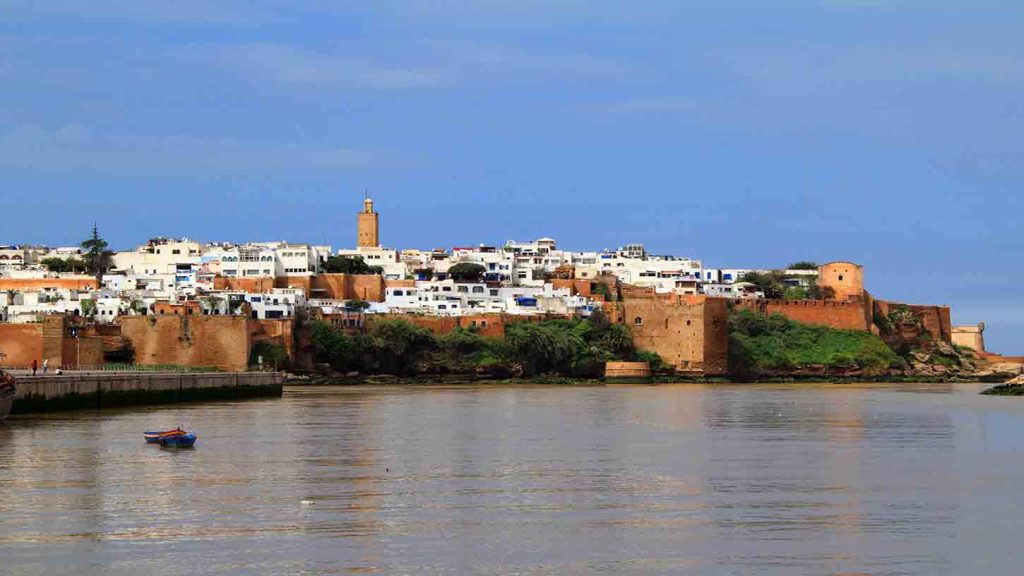
- Don’t Miss: The Hassan Tower, an ambitious 12th-century project intended to be the world’s largest minaret, and the Oudayas Kasbah, a blue-and-white fortress overlooking the Atlantic.
Each dynasty left behind a unique architectural fingerprint on the landscape. For a deeper dive into the specific monuments and palaces of these urban centers, see our detailed guide on how to Explore Morocco’s Rich Heritage: Historical City Tours.
The “Perfectly Morocco” Perspective
Trying to see all four cities on your own can feel like a logistical marathon. On our Morocco Imperial Cities private tour, we take the stress out of the “shuttling” so you can focus on the stories.
We don’t just walk you through the gates; we explain the dynastic shifts and the architectural evolution that transformed these cities into the UNESCO treasures they are today.
The Red Earth: Kasbahs and Ancient Caravan Routes
As you leave the high peaks of the Atlas Mountains and descend toward the desert, the landscape shifts into a dramatic palette of deep ochre and burnt orange. This is the “Red Earth” country, a region where history was written not in marble or stone, but in Pisé—a traditional rammed-earth technique using clay, straw, and water.
For centuries, this was the most valuable real estate in North Africa. This region served as the final stop for the massive trans-Saharan caravans that crossed the “Sea of Sand” from Timbuktu. These caravans, sometimes thousands of camels strong, brought gold, salt, ivory, and spices to the gates of Europe.
Ait Ben Haddou: The Sentinel of the Sands
The crown jewel of this region is the Ksar of Ait Ben Haddou. A UNESCO World Heritage site, this fortified village is a striking example of Moroccan earthen architecture. More than just a fortress, it was a “hub” where travelers rested, traded, and sought protection.
- The Architecture. The towers of Ait Ben Haddou are decorated with geometric patterns inspired by Berber (Amazigh) motifs, designed to ward off evil spirits and showcase the wealth of the merchant families who lived within.
- The Hollywood Connection. Its timeless beauty has made it the backdrop for legendary films like Gladiator, Lawrence of Arabia, and Game of Thrones.
The Ounila Valley: The Hidden Salt Road
Winding alongside the Ksar is the Ounila Valley, the ancient path that linked the desert to the palaces of Marrakech. This valley is dotted with crumbling Kasbahs and abandoned salt mines. Exploring this route offers a glimpse into a time when salt was as valuable as gold, and the control of these mountain passes meant control over an empire’s wealth.
The Kasbahs of the south are just one part of the Moroccan puzzle. To see how these historic sites fit into the country’s most iconic landscapes, explore our list of the Top 10 Hidden Gems in Morocco.
The “Perfectly Morocco” Perspective
Most day-trippers from Marrakech only spend an hour at the entrance of Ait Ben Haddou before leaving.
On our private desert expeditions, we take you deeper. We cross the river to explore the quiet, upper reaches of the Ksar where the view of the valley is most breathtaking. We also take the scenic “Old Salt Road” through the Ounila Valley, a route too narrow for large tour buses, allowing you to see the “real” rural Morocco that remains untouched by mass tourism.
Quick Facts for Your Visit
- Definition: A Kasbah is a fortified residence for a single family; a Ksar is a fortified village for an entire community.
- Best View: Climb to the Agadir (granary) at the very top of Ait Ben Haddou for a 360-degree view of the palm groves.
- Cultural Note: The architecture is organic—without constant maintenance and replastering after the winter rains, these magnificent structures would literally melt back into the earth.
A Tapestry of Faiths: Jewish and Andalusian Heritage
Morocco’s history is not just a story of successive Muslim dynasties; it is also a story of Convivencia—the coexistence of different faiths and cultures. For centuries, Morocco served as a refuge and a home for diverse communities, most notably the Jewish and Andalusian populations who fled the Iberian Peninsula. This “melting pot” of influences is what gives Moroccan culture its unique, multifaceted character.
The Andalusian Legacy: A Gift from the North
In 1492, as the Reconquista ended in Spain, thousands of Muslims and Jews (Moors and Sephardic Jews) crossed the Strait of Gibraltar into Morocco. They brought with them the high culture of Al-Andalus: sophisticated agriculture, refined music, and the intricate geometric art of Zellige.
- Chefchaouen. The famous “Blue Pearl” was largely shaped by these refugees, who built the city to resemble the Andalusian villages they had left behind.
- Tetouan. Known as the “Daughter of Granada,” this city remains the most Andalusian of all Moroccan towns, with architecture that feels like a mirror image of southern Spain.
The Jewish Heart: The Mellahs of Morocco
Morocco once housed the largest Jewish population in the Muslim world, and their impact on the nation’s history is profound. Every major city in Morocco has a Mellah—a historic Jewish quarter. These were centers of trade, craftsmanship, and scholarship.
- Essaouira (Mogador). Once a bustling port where the Jewish population nearly equaled the Muslim population, Essaouira remains a symbol of religious harmony.
- Marrakech & Fes. The Mellahs here are home to beautifully preserved synagogues, such as the Lazama Synagogue in Marrakech and the Ibn Danan in Fes, as well as ancient Jewish cemeteries that are still pilgrimage sites today.
The “Perfectly Morocco” Perspective
Navigating the Jewish and Andalusian history of Morocco requires sensitivity and deep local knowledge. Many of the most significant sites—hidden synagogues, private family libraries, or artisan workshops—are tucked away in the deepest corners of the Medina.
On our Jewish Heritage and Cultural Tours, we introduce you to the custodians of these sites. We go beyond the architecture to explain how these communities shaped Moroccan cuisine (like the use of preserved lemons and specific spices) and music, providing a truly holistic view of the Moroccan identity.
Quick Facts for Your Visit
- What is a Mellah? The term comes from the Arabic word for “salt,” as the first Jewish quarter in Fes was located near a salt marsh.
- The “Andalusian Garden”. You can see this style of garden—characterized by symmetry and water channels—at the Oudayas Kasbah in Rabat or the Le Jardin Secret in Marrakech.
- Modern Context. Morocco is one of the few countries in the region where Jewish heritage is officially protected and celebrated as an essential part of the national identity.
The Modern Layer: Art Deco and Independence
History in Morocco didn’t stop with the ancient dynasties. The 20th century added a striking new layer to the country’s architectural and social landscape. This “Modern Layer” is most visible in cities like Casablanca and Rabat, where the influence of the French Protectorate era (1912–1956) blended with traditional Moroccan aesthetics to create something entirely unique: Mauresque architecture.
Casablanca: The Art Deco Metropolis
While Fes is the soul of Morocco, Casablanca is its heartbeat. In the early 1900s, architects from around the world saw Casablanca as a laboratory for new ideas. They combined the sleek lines of Art Deco and Modernism with traditional Moroccan motifs like horseshoe arches and intricate tilework.
- The Landmark. Place Mohammed V and the surrounding administrative buildings are world-class examples of this hybrid style.
- The “Mauresque” Vibe. Keep an eye out for the Cinema Rialto or the various white-washed apartment blocks that give the city its “White City” name. They are a stunning contrast to the red-clay Kasbahs of the south.
The Hassan II Mosque: A Modern Masterpiece
Completed in 1993, the Hassan II Mosque in Casablanca is perhaps the greatest tribute to Moroccan history ever built. While it is a modern structure featuring a retractable roof and laser beams pointing toward Mecca, it was built by over 6,000 master artisans using techniques passed down since the 12th century. It is a bridge between the ancient craftsmanship of the past and the technological ambitions of the future.
Rabat: The “Modern Capital and Historic City”
Rabat holds a unique UNESCO status because it successfully preserves its ancient heritage while functioning as a modern, green capital. Here, you can visit the 12th-century Hassan Tower in the morning and walk through wide, Parisian-style boulevards lined with Art Deco cafes in the afternoon.
The “Perfectly Morocco” Perspective
Many travelers treat Casablanca merely as an airport hub, but we believe it is the essential first chapter of your Moroccan story. On our Casablanca City Tours, we take you beyond the transit hotels. We explore the “Neo-Moorish” neighborhoods and the vibrant Art Deco districts, explaining how the struggle for Independence in 1956 shaped the modern, progressive Morocco you see today.
From the Roman mosaics of Volubilis to the Art Deco curves of Casablanca
Morocco is a country where every stone has a story to tell. Exploring this history isn’t just about looking backward; it’s about understanding how these layers of culture, faith, and architecture have created one of the most stable and welcoming nations in the world.
At Perfectly Morocco Tours, our mission is to ensure you don’t just see these sites. With us, you feel the weight of the history they represent. Whether you have 5 days or 14, we invite you to join us on a private journey through time.
Quick Facts for Your Visit
- Must-See. The Hassan II Mosque (one of the few mosques in Morocco open to non-Muslims).
- Architecture Tip. Look up! In Casablanca, the most beautiful Art Deco details are often found on the balconies and window frames of the upper floors.
- Modern History. 1956 is the pivotal year for modern Morocco. That year the country regained its sovereignty from France and Spain.