For many travelers, the decision to visit the Sahara Desert comes down to whether the significant travel time is justified. Located nearly ten hours from Morocco’s major cities, the desert is not a convenient addition to an itinerary, but it remains the most sought-after experience in the country. The reason for its enduring appeal is not merely the presence of sand, but the opportunity to enter one of the world’s most extreme and well-preserved natural environments.
The Sahara offers a scale of landscape that is difficult to find elsewhere. In areas like Erg Chebbi and Erg Chigaga, the dunes rise to heights of 150 meters, creating a topography that shifts constantly with the wind.
Beyond the visual impact, the desert provides a rare level of isolation. Away from the noise and light pollution of urban centers, visitors experience absolute acoustic silence and a night sky that is among the clearest in the world.
Furthermore, the Sahara is a cultural landscape with a history shaped by nomadic tribes and trans-Saharan trade.
Visiting the desert provides direct insight into Amazigh (Berber) heritage, from traditional survival techniques to the unique music and hospitality that have defined life in the dunes for centuries. Whether for the physical challenge, the cultural depth, or the psychological benefit of “disconnecting” from the modern world, the Sahara serves as a transformative experience that defines the Moroccan journey.
What Makes the Sahara Desert Unique?
The Sahara is the world’s largest hot desert, but its “uniqueness” goes far beyond its size. It is a land of extremes where geology, climate, and ancient human history converge to create an environment unlike any other on Earth.
Here are the specific factors that make the Sahara truly unique:
1. The “Singing Sands” (Acoustic Phenomena)
The Sahara is one of the few places on Earth where you can hear “Singing Sands.” In certain dune fields, the friction between sand grains as they slide down a slope creates a low-frequency hum that can be as loud as a low-flying plane. This happens due to the specific size, shape, and silica content of the desert’s sand grains, creating a natural musical instrument out of the landscape.
2. Extraordinary Geologic Diversity
Most people imagine the Sahara as a “sea of sand” (Ergs), but sand dunes actually cover only about 25% of its surface. The rest of the desert is composed of:
- Hamadas. High, barren, rocky plateaus.
- Regs. Vast plains of black and red gravel.
- Mountains. Unexpectedly, the Sahara contains volcanic peaks and mountain ranges (like the Atlas and the Hoggar) that can actually see snowfall in the winter.
3. The World’s Highest Solar Intensity
The Sahara is unique in its atmospheric clarity. Because there is almost no humidity to block the sun’s rays, it receives the most direct and intense sunlight on the planet. This results in the most dramatic diurnal temperature swings imaginable; it is possible to experience 45°C (113°F) during the day and drop to -5°C (23°F) the same night.
4. Prehistoric “Green Sahara” Evidence
Thousands of years ago, the Sahara was a lush, green savannah filled with lakes, hippos, and giraffes. It is unique because it holds a massive “library” of prehistoric rock art and fossils. You can find 8,000-year-old carvings of aquatic animals in the middle of a hyper-arid desert, proving that the Sahara undergoes a 20,000-year cycle between being a desert and a grassland.
5. Zero Light Pollution (The Ultimate Dark Sky)
Because the Sahara is one of the least populated places on the planet and has an extremely dry atmosphere, it offers some of the lowest light pollution levels on Earth. The air is so clear that the Milky Way doesn’t just look like a faint cloud; it casts a visible shadow on the sand. For astronomers and stargazers, this is the “purest” view of the cosmos available to a traveler.
6. Nomadic Cultures
The Sahara is the cradle of the Amazigh (Berber) and Tuareg cultures. These groups developed unique survival technologies—such as the Khettara (underground irrigation systems) and the Cheche (a multi-functional turban)—that are specifically engineered for this environment. Their hospitality rituals, centered around tea and protection of the traveler, are unique to the harsh realities of desert life.
7. The Vastness of the Sahara Desert
Covering over 9 million square kilometers, the Sahara Desert extends across several countries, including Algeria, Egypt, Sudan, and of course, Morocco. The Moroccan Sahara is particularly famous for its massive sand dunes, picturesque oases, and rich cultural heritage. Visitors can explore traditional Berber villages, marvel at ancient architecture, and experience the unique way of life in one of the harshest environments on Earth.
The Scale and Visual Impact of the Dunes
The primary reason most travelers visit the Sahara is to see the massive dune fields, known as Ergs. Unlike the rocky plateaus (hamada) that make up much of the desert, these ergs consist of miles of rolling sand peaks that are constantly reshaped by the wind. In Morocco, Erg Chebbi and Erg Chigaga are the two main destinations that offer this iconic “sea of sand” landscape.
The visual experience is defined by the shifting play of light and shadow. Because the sand contains high levels of iron and quartz, the dunes change color throughout the day. At midday, the sand appears pale and golden, but as the sun moves lower during sunrise and sunset, the dunes take on deep shades of orange, ochre, and red. This “golden hour” is the most popular time for photography, as the long shadows emphasize the sharp ridges and immense scale of the peaks, some of which reach heights of 150 meters.
Beyond the aesthetics, there is a profound sensory experience in the deep desert. Once you move into the heart of the dunes, you encounter absolute silence. Away from the sounds of engines, birds, and wind-rustled trees, the environment provides a rare level of acoustic stillness. For many, this sensory deprivation is the most memorable part of the trip, offering a sense of peace and isolation that is impossible to find in Morocco’s bustling cities.

One of the World’s Best Stargazing Locations
Because the Sahara is one of the most sparsely populated areas on Earth, it suffers from virtually zero light pollution. This makes it a premier destination for astronomical observation. Once the sun sets and the desert floor cools, the sky becomes incredibly clear, revealing a density of stars that is invisible in most of the Western world.
On a clear night, the Milky Way is visible to the naked eye as a distinct, glowing band across the sky. Visitors can easily identify major constellations, planets, and even passing satellites without the need for specialized equipment. This nightly display is the primary form of entertainment at desert camps. For many travelers, the opportunity to see the universe in its natural state, unfiltered by the haze of city lights.
Insight into Amazigh (Berber) Culture and Heritage
While the landscape is the initial draw, the human history of the Sahara is what provides the journey with its depth. The desert is the ancestral home of the Amazigh (Berber) and Sahrawi people, who have navigated these dunes for millennia. A visit to the Sahara is an opportunity to witness a way of life that has been defined by adaptation and resilience in one of the world’s most inhospitable climates.
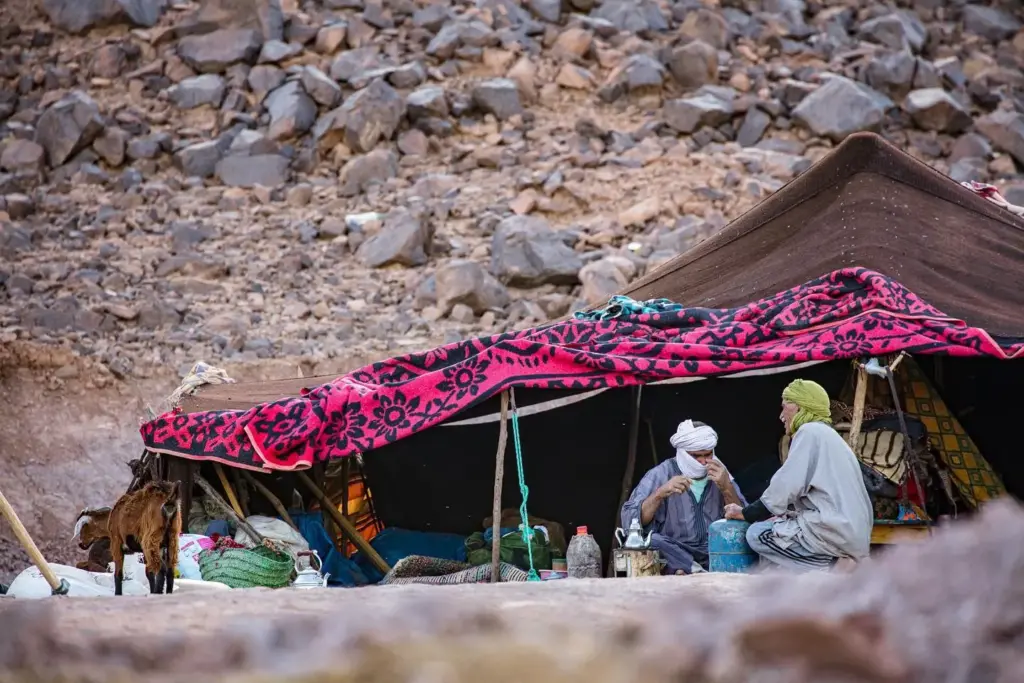
It is the opportunity to gain direct insight into how life is sustained in the desert. From the architecture of traditional “black tents” made of goat and camel hair to the intricate rituals of tea-making, every aspect of the culture is a masterclass in survival and hospitality.
The dunes were once the highways for trans-Saharan caravans carrying salt, gold, and spices. Walking these paths on a camel trek connects you to the historical trade routes that once linked Timbuktu to the great Imperial Cities. To see how this desert legacy fits into the nation’s wider timeline, explore our guide on Morocco’s living history, from Roman ruins to imperial splendor.
Evenings in the desert are often centered around the campfire, where you may experience Gnaoua music or traditional Saharan drumming. These rhythmic, hypnotic performances are deeply spiritual and offer a glimpse into the oral traditions that have preserved the history of the desert tribes for generations.
The “Digital Detox” and Psychological Benefits
In a world of constant connectivity, the Sahara offers a rare and involuntary “digital detox.” Because cellular service is spotty and Wi-Fi is almost non-existent deep within the dunes, the desert forces a shift in perspective.
The sheer vastness of the horizon provides a sense of scale that is both humbling and clarifying. Without the distractions of notifications and news cycles, the pace of life slows to the movement of the sun and the shadows. This environment encourages a state of mindfulness; many visitors report that the “mental quiet” achieved in the dunes is the most significant benefit of the trip. It is a place where time is measured by the length of a shadow rather than a clock, allowing for a level of reflection that is rarely possible in modern daily life.

Seasonal Beauty and Changing Landscapes
The Sahara is often perceived as a static environment, but it is actually a landscape in constant flux. The appearance of the desert changes not only by the hour but by the season, offering a different visual and atmospheric experience depending on when you visit.
The Colors of the “Golden Hour”
The most dramatic changes occur twice daily during sunrise and sunset. Because of the high mineral content in the sand, the dunes act as a canvas for the sun’s angle. At dawn, the sand can appear cool and pale pink; by midday, it is a bright, reflective gold; and as the sun dips below the horizon, the dunes transform into deep shades of ochre, burnt orange, and even purple.
Winter Clarity (November – February)
During the winter months, the air is at its crispest. The lack of heat haze allows for incredible visibility, making the Atlas Mountains appear sharp against the desert horizon. This is also the best time for photography, as the low winter sun creates long, dramatic shadows across the dune ridges throughout the day.
The Rare Bloom (Post-Rain)
Though rare, the Sahara occasionally experiences brief periods of rainfall, usually in the late autumn or early spring. When this happens, the “seeds of the desert” that have lain dormant for years can sprout almost overnight. The sight of thin blankets of green grass or tiny desert flowers emerging against the orange sand is one of the most unique and fleeting spectacles in the natural world.
The Dust of Spring (March – May)
The spring season brings the Sirocco winds. While these can cause sandstorms, they also change the topography of the desert. You can watch the physical landscape being reshaped as the wind moves millions of tons of sand, erasing yesterday’s tracks and creating entirely new dune peaks by morning.
The Contrast of the Oases
The beauty of the Sahara is defined by its contrasts. Throughout the year, the arid dunes are punctuated by lush, green oases fed by underground springs. The sight of thousands of date palms and vibrant gardens hidden in a valley of sand is a reminder of the desert’s hidden vitality and its ability to sustain life in extreme conditions.
The Variety of Desert Activities
While the stillness of the Sahara is a major draw, the region offers a diverse range of activities that cater to both adrenaline seekers and those looking for deep cultural immersion.
All of those activities are part of our Sahara tours, for example The Saharan Grandeur: 4-Day Desert Tour from Fes to Marrakech.
Because the terrain varies from soft sand dunes to rocky plateaus, the way you explore the desert can change significantly from one day to the next. We have written an article on how to plan and prepare for Sahara desert tour.
High-Adrenaline Exploration (Quad Biking & Buggies)
For those looking to cover more ground than a camel allows, quad biking and dune buggies offer a high-speed way to navigate the Erg Chebbi or Erg Chigaga dunes. These excursions allow you to reach the summits of some of the highest peaks in minutes, providing panoramic views that are often inaccessible by foot.
Sandboarding
A unique desert pastime, sandboarding involves sliding down the steep faces of the dunes on modified snowboards. It is an accessible activity for all ages—though be prepared for the physical challenge of hiking back up the dune after each descent, as there are no lifts in the Sahara.
4×4 Off-Road Safaris
A 4×4 excursion is the most efficient way to see the “Black Desert” (Hamada) and the diverse landscapes surrounding the dunes. These tours often include stops at fossil beds near Erfoud, abandoned French colonial mines at M’Fis, and the village of Khamlia, where you can listen to traditional Gnaoua music performed by the descendants of former slaves from sub-Saharan Africa.
Cultural Visits with Nomadic Families
Many travelers choose to spend an afternoon visiting the few remaining nomadic families who still live in traditional tents on the desert’s edge. This experience offers a raw look at desert life, usually involving a shared glass of mint tea and a discussion about the challenges of water scarcity and herd management in the modern era.
The “Sand Bath” (Traditional Wellness)
In the peak of summer (July and August), the village of Merzouga is known for its traditional sand baths. Locals bury participants in the hot sand for several minutes, a practice believed to help with rheumatism, muscle pain, and various skin conditions. It is a centuries-old Saharan therapy that remains a significant part of the local culture.
Star-Gazing & Campfire Rhythms
As night falls, the activity shifts to the desert camp. After a traditional meal, the evening usually centers around a large campfire where local guides perform Amazigh drumming and folk songs. Because there is no light pollution, this is also the primary time for stargazing—an activity that requires nothing more than a blanket and a clear view of the sky.
Camel Trekking: The Traditional Way to Travel
One of the most authentic ways to experience the Sahara Desert is through camel trekking. Camels have been used by the Berbers for centuries as the primary means of transport across the desert. These majestic animals are perfectly suited for the harsh desert environment, and riding on camelback is an unforgettable experience.
Camel treks typically last anywhere from a few hours to several days, depending on the tour you choose. A popular destination for camel treks is Erg Chebbi, where you can journey deep into the desert, far from the noise and hustle of modern life. As you traverse the dunes, you’ll feel a deep connection to the land and its history. Many visitors find the peace and tranquility of the desert to be a life-changing experience.
Luxury Desert Camps: A Taste of Opulence
For those looking for a more comfortable way to experience the Sahara, luxury desert camps provide an ideal solution. These camps are located deep in the desert and offer a mix of adventure and comfort. Staying in a luxury camp allows you to experience the beauty of the desert while enjoying modern amenities like gourmet meals, hot showers, and plush beds.
Hot Air Balloon Rides: A Bird’s Eye View of the Sahara
For a truly unique perspective of the Sahara Desert, consider taking a hot air balloon ride over the dunes. Drifting silently over the desert at sunrise or sunset offers an unparalleled view of the landscape. From above, you can appreciate the vastness of the Sahara in a way that’s impossible from the ground. Hot air balloon tours typically depart from Marrakech and include transportation to and from the launch site.
Why visit Sahara Desert – Summary
Ultimately, the reason to visit the Sahara Desert is that it offers an experience that is entirely removed from the familiar. It is not a destination for those seeking convenience, but for those seeking a profound connection with nature and history. The combination of the immense scale of the dunes, the clarity of the night sky, and the enduring warmth of Amazigh hospitality creates a journey that is often the most significant and lasting memory of a trip to Morocco.
The ten-hour drive is not a barrier; it is the necessary transition into a world where silence, light, and landscape take center stage.
Explore our Sahara Desert Tour Itineraries.