To truly understand Morocco, you have to leave the asphalt behind.
While the vibrant souks of Marrakech and the imperial history of Fes offer a sensory explosion, they represent only one side of the Moroccan coin. Beyond the city walls lies a world of ancient mule tracks, terraced gardens, and high-altitude plateaus that can only be reached at the pace of five kilometers per hour.
Exploring Morocco via trekking is more than just an outdoor activity; it is a gateway to the “Real Morocco”—a place where Berber hospitality isn’t a service, but a way of life.
The country’s geographical diversity is its greatest asset for hikers. Within a single week, you can transition from the snow-capped alpine peaks of the High Atlas to the red volcanic spires of the Anti-Atlas, or the cedar-shaded lakes of the Middle Atlas. Whether you are aiming to stand atop the highest summit in North Africa or simply want to walk between remote villages where life hasn’t changed in centuries, the Moroccan trails offer a profound sense of scale and perspective that no car or train can match.
The Major Regions for Trekking in Morocco
Morocco’s trekking terrain is roughly divided into four distinct regions, each offering a completely different climate, difficulty level, and aesthetic.
The High Atlas
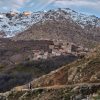
This is the most famous trekking destination in the country, home to the mighty Jebel Toubkal (4,167m). It offers classic alpine scenery: dramatic ridges, deep gorges, and traditional Berber villages clinging to the hillsides. Because of its altitude, it is the best place to trek during the late spring, summer, and early autumn when the lower plains are too hot for physical exertion.
Read more about Atlas mountains in our Ultimate Travel & Adventure in the Atlas Mountains Guide.
The Volcanic South: Anti-Atlas & Jebel Saghro
Located between the High Atlas and the Sahara, the Anti-Atlas is a rugged, arid landscape of weathered granite and volcanic rock. Jebel Saghro is the highlight here, featuring “lunar” scenery of rock pinnacles and deep canyons. Because it is lower and drier, it is the premier destination for winter trekking (November to March), when the High Atlas is covered in snow.
The Rif Mountains: The Mediterranean North
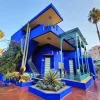
In the north, the Rif Mountains offer a softer, greener experience. Characterized by limestone peaks and Mediterranean forests, this region is home to the famous “Blue City” of Chefchaouen. It is worth looking at our Chefchaouen one day private trip from Fes.
Trekking here often involves walking through lush national parks like Talassemtane, where you’ll find hidden waterfalls and rare fir forests.
Cedar Forests and Hidden Lakes in The Middle Atlas
Often overlooked, the Middle Atlas is a paradise for nature lovers who prefer gentler slopes. It is a land of massive ancient cedar forests, inhabited by wild Barbary macaques, and serene volcanic lakes (aguelmames). It is an excellent region for day hikes and seeing a more fertile, forested side of the country.
10 Powerful Reasons to Explore the Moroccan Trails
While the landscapes themselves are breathtaking, the true power of trekking in Morocco lies in the unique combination of physical challenge, ancient culture, and raw natural beauty. Here is why the trails are the ultimate way to experience the country.
1. Standing on the Roof of North Africa
Summiting Jebel Toubkal (4,167m) is a bucket-list experience for any adventurer. As the highest point in North Africa, the climb is a non-technical but demanding trek that rewards you with an unparalleled 360-degree view. On a clear day, you can see the shimmering haze of the Sahara Desert to the south and the sprawling Marrakech plains to the north.
2. Genuine Berber (Amazigh) Hospitality
The trails are the veins of the Berber heartland. Unlike the polished service of city hotels, mountain hospitality is humble and profound. Staying in a Gite d’Etape (a village guesthouse) means sharing a tagine by a wood fire, sleeping in a home built of local stone and mud, and experiencing a culture where guests are considered a “blessing from God.”
3. The Mule-Supported Trekking
One of the most traditional aspects of Moroccan trekking is the use of mules. These sure-footed animals, often called the “Berber 4×4,” carry your heavy gear and camping supplies, allowing you to walk with only a light daypack. This traditional support system not only makes high-altitude trekking accessible to more people but also provides vital income for local mountain families.
4. Biodiversity and Ancient Forests
The Moroccan trails lead you through some of the most diverse ecosystems in Africa. In the Middle Atlas, you can walk beneath the canopy of 800-year-old giant cedars, where wild Barbary macaques play in the branches. In the south, you’ll find argan forests endemic to the Atlantic coast, providing a green contrast to the surrounding arid terrain.
5. Stargazing Without Light Pollution
At high altitude, the Moroccan night sky is a revelation. Away from the glare of the cities, the air in the Atlas and the Anti-Atlas is exceptionally clear. From a basecamp at 3,000m, the Milky Way is so vivid it feels within reach.
6. Geological Wonders of the South
Trekking through regions like Jebel Saghro or the Todra Gorge is like walking through a living textbook of geology. You’ll encounter massive volcanic plugs, sheer limestone cliffs rising 400m above the canyon floor, and rare fossils embedded in the rock. The scale of these formations is best appreciated on foot, where you can feel the true height of the canyon walls.
7. The “Happy Valley” of Aït Bouguemez
Aït Bouguemez is widely considered the most beautiful valley in Morocco. Known as the “Happy Valley,” it is a masterclass in sustainable, traditional agriculture. Walking through its terraced fields of apples, walnuts, and corn, you see an ancient irrigation system (seguias) that has functioned for centuries, maintaining a vibrant green oasis amidst the rugged peaks.
8. The “Back Way” to Hidden Waterfalls
Most tourists see the Ouzoud or Akchour waterfalls from a crowded parking lot. Trekking allows you to arrive via the “back way”—following the riverbeds or mountain ridges to discover secondary cascades and hidden swimming holes that the tour buses never reach.
9. A Physical and Mental Reset
Morocco’s trails offer something rare in the modern world: absolute silence. The rhythmic “crunch” of boots on stone and the absence of cellular signal provide a powerful mental detox. The physical exertion of the climb combined with the stillness of the high plateaus offers a profound sense of clarity and peace.
10. A Destination for Every Season
Morocco is one of the few places where you can trek year-round. When the High Atlas is snow-bound in January, the Anti-Atlas is perfect and mild. When the Sahara is too hot in July, the High Atlas peaks offer a cool refuge. No matter when you visit, there is a trail waiting for you.
Explore Morocco on Foot – Summary
Exploring Morocco via trekking is not just about the physical achievement of reaching a summit or crossing a pass.
If you want to experience the authentic Morocco beyond the tourist hubs of Marrakech and Fes, you have to get onto the trails. Trekking offers a level of access to remote Berber villages, high-altitude peaks, and volcanic landscapes that is impossible to reach by car. From the physical challenge of summiting North Africa’s highest peak to the cultural immersion of staying in local village homes, the Moroccan mountains provide a diverse, year-round destination for every level of hiker.
Why Book Your Tour With Us?
Planning a mountain expedition in a foreign country involves complex logistics, from hiring reliable muleteers to navigating high-altitude weather shifts. We specialize in seamless, guided trekking experiences that prioritize both your safety and local community support.
We only work with licensed professionals who know the terrain and the culture intimately.
Whether you want a grueling 3-day Toubkal summit or a leisurely 5-day walk through the “Happy Valley,” we tailor the route to your fitness level.
We handle everything including transport from your hotel, professional gear rental, mountain meals, and traditional accommodations.